Support our educational content for free when you purchase through links on our site. Learn more
🛹 What Skateboard Brands Do Pros Use? 20 Top Picks

What skateboard brands do professional skaters use? Pros ride a wide mix, including Baker, Girl, Chocolate, Real, Antihero, Santa Cruz, Powell Peralta, Primitive, Plan B, and Zero. There’s no single “pro-approved” winner: riders choose boards for their preferred shape, feel, team relationships, and sponsorships.
We’ve watched plenty of skaters pick a deck because a favorite rider’s name was on it, then discover that the width or shape wasn’t right for them. The smarter move? Use pro setups as inspiration, compare the actual deck specs, and choose what feels good under your feet.
Key Takeaways
- Pros ride many skateboard brands, and sponsorships and team rosters can change.
- Deck fit matters more than the logo. Compare width, wheelbase, shape, and construction.
- A pro model isn’t automatically a different or better deck; check the specific product details.
- Decks, trucks, wheels, and bearings don’t need matching brand names. Choose compatible parts that suit your skating.
- Pick a brand you like, then test its board for your terrain and riding style.
Table of Contents
- ⚡️ Quick Tips and Facts
- 🛹 Why Professional Skaters Choose Certain Skateboard Brands
- 📜 Skateboard Brand History: From Garage Decks to Pro Teams
- 🏆 What Skateboard Brands Do Professional Skaters Use?
- 1. Baker Skateboards
- 2. Element Skateboards
- 3. Primitive Skateboarding
- 4. Plan B Skateboards
- 5. Santa Cruz Skateboards
- 6. Powell Peralta
- 7. Girl Skateboards
- 8. Chocolate Skateboards
- 9. Real Skateboards
- 10. Antihero Skateboards
- 11. Zero Skateboards
- 12. Toy Machine
- 13. Almost Skateboards
- 14. April Skateboards
- 15. Fucking Awesome
- 16. Kroked Skateboarding
- 17. Habitat Skateboards
- 18. DGK Skateboards
- 19. GX100
- 20. Welcome Skateboards
- 🎯 Which Skateboard Brands Do Pros Use for Street, Park, and Vert?
- 🪵 Pro Skateboard Decks: Shapes, Sizes, and Construction
- 🔧 Do Professional Skaters Use Matching Deck, Trucks, Wheels, and Bearings?
- 🤝 How Pro Skateboard Sponsorships and Team Riders Work
- 🛒 How to Choose a Skateboard Brand That Fits Your Style
- Deck width, wheelbase, and shape
- Riding style and terrain
- Budget, durability, and availability
- Pro model graphics versus blank decks
- 🚫 Common Myths About Pro Skateboard Brands
- ✅ Quick Tips for Buying a Pro-Brand Skateboard
- 🏁 Conclusion
- 🔗 Recommended Links
- ❓ FAQ
- 📚 Reference Links
⚡️ Quick Tips and Facts
First, our skateboard brand guide lays out the bigger picture; here, we’ll focus on which brands pros ride, why they choose them, and what actually matters when you’re picking a deck.
The quick answer
Professional skateboarders ride many brands, not one secret industry-wide favorite. Baker, Girl, Chocolate, Real, Antihero, Santa Cruz, Powell Peralta, Primitive, Plan B, Zero, Toy Machine, April, and others all have pro riders or recognizable team histories. The exact roster changes, and sponsorship is only one part of the setup: a pro’s deck, trucks, wheels, shoes, and clothing may come from different companies.
| Question | Short answer |
|---|---|
| What brands do pros ride? | A wide mix of established skate companies, including skater-owned and larger corporate-backed brands |
| Does a pro’s deck sponsor make that deck right for you? | Not automatically. Size, shape, construction, and feel matter more than the logo |
| Do pros ride complete boards? | Some do, but sponsored pros commonly build setups from separate components |
| Are pro models better? | They’re often made to the brand’s usual standards, with a pro’s name, graphic, and sometimes a preferred shape |
| Do skateboarders stick to one brand forever? | No. Riders switch sponsors, and team lineups change |
| Which brand should you start with? | Choose a reputable deck that matches your preferred width and terrain, then fine-tune the rest of your setup |
Our crew’s take: When we test a deck, we pay attention to its pop, concave, wheelbase, and how consistently it holds up. The graphic gets the first glance; the shape gets the next hundred sessions.
For more boards, components, and culture, browse our Skateboard Brand Guides, Skateboard Gear, and Skateboard Culture sections. 🛹
🛹 Why Professional Skaters Choose Certain Skateboard Brands
A pro’s skateboard brand choice can reflect how a deck feels, who is on the team, the company’s culture, the strength of the sponsorship, and the rider’s personal relationships. It isn’t a universal ranking where every finalist lands on the same board.
Performance comes first—but it isn’t the only factor
Skaters repeat tricks, skate varied terrain, and put serious wear on their gear. A board that feels predictable underfoot can matter more than a flashy feature list. Still, pros don’t all want the same thing: one rider may prefer a wider, stable deck, while another wants a narrower shape that flips quickly.
Here’s what often enters the decision:
- Shape and dimensions: Deck width, wheelbase, nose and tail proportions, and concave affect how the board feels.
- Consistency: A familiar shape can make it easier to replace a worn deck without relearning your setup.
- Team fit: Riders may want to skate alongside people they respect and identify with.
- Company relationship: Communication, support, creative freedom, and a fair deal can shape a rider’s loyalty.
- Visibility and audience: A pro model lets fans connect a rider’s name and graphic with a brand.
- Availability: A great deck is less useful if you can’t find its size or shape when your current one snaps.
Sponsorship is not a product-testing trophy
A pro riding a brand is evidence of a sponsorship or relationship, not proof that the brand is objectively best for every skater. In a Jenkem interview with skateboard agent Circe Wallace, Wallace described how contest results and visibility can affect a skater’s market value, while also emphasizing the importance of a good “wood partner.” That phrase captures something real: the board company is part of a rider’s working relationships and skate identity.
One perspective: Big-brand sponsorships can bring broad exposure and resources.
Another perspective: Smaller, skater-led companies may offer a closer cultural fit and more direct relationships.
The practical takeaway: Don’t assume either scale guarantees better boards or better support.
What a pro’s setup can—and can’t—tell you
A pro setup is useful as a starting point for research, not a blueprint you have to copy. The rider’s shoe size, stance, preferred terrain, and habits may differ from yours. If you’re curious about equipment choices beyond decks, our skateboard gear guides cover the parts that make a complete setup.
We’ll return to sponsorship relationships later. First, it helps to understand how these brands got their place in skateboarding—and why their histories can be as different as their team videos.
📜 Skateboard Brand History: From Garage Decks to Pro Teams
Skateboard companies have grown through skater-founded labels, independent shops, team videos, product innovation, licensing, acquisitions, and plenty of financial risk. A brand’s history can explain its image, but it does not guarantee that every current product suits every rider.
The skater-led company tradition
Companies such as Girl, Baker, Real, and Antihero built identities around skateboarding and the personalities of their riders. Teams and videos helped make their names recognizable, while pro models gave skaters a way to support riders whose skating they followed.
Some brands have also dealt with ownership changes, shifting distribution, and changes in creative direction. A company can retain its name while its ownership or business priorities change; conversely, a corporate relationship does not automatically erase a brand’s skateboarding roots.
Why brand history sparks debate
A video summary included earlier in this article traces several brands through those tensions: Girl’s skater-centered beginnings, Baker’s crew-driven identity, Almost’s technology focus, Birdhouse’s financial challenges, and changes in ownership around DC Shoes and World Industries. It raises a fair question: What happens when skateboard culture answers to a boardroom?
The answer depends on the company, the era, and the people involved. Brand ownership is only one clue. Team choices, product availability, creative direction, and rider relationships also matter. We recommend checking a brand’s current team and product range, rather than treating an old reputation as a guarantee of what it offers today.
The story behind one surprising sponsor switch
In that Jenkem interview, Wallace discussed Paul Rodriguez’s move from Girl to Nike SB and Nike’s effort to establish itself in skateboarding. She said, “It wasn’t until they had cracked the nut with Paul that [Nike] was able to really gain any market share [in skateboarding].” That’s an agent’s perspective on a major sponsorship story, not a claim that every skater or fan viewed the shift the same way.
The lesson isn’t that one kind of brand is always better. It’s that a pro’s sponsor can change as a skater’s career, business opportunities, and priorities change. That brings us to the brands riders and fans most often ask about.
🏆 What Skateboard Brands Do Professional Skaters Use?
Pros ride a broad selection of brands, and team rosters change over time. The brands below are known for professional teams, pro-model decks, or notable histories in skateboarding. We’ve included official links where available so you can check each company’s current products and team information.
| Brand | Why skaters know it | What to consider |
|---|---|---|
| Baker | Crew-driven image and influential team videos | Check the deck’s dimensions and shape, not just the graphic |
| Girl and Chocolate | Longstanding teams and recognizable pro models | Compare the exact size and shape listed for each deck |
| Real and Antihero | Distinct skate identities and established team histories | Their board graphics and team styles differ; pick what speaks to you |
| Santa Cruz and Powell Peralta | Deep heritage and classic graphics | Look at the specific construction and shape in the current model |
| Primitive and Plan B | High-profile modern teams and pro models | Model and size availability varies |
| April | Strong connection to its pro team and contemporary skate videos | Confirm the shape and specifications of the individual deck |
| Zero and Toy Machine | Long-running identities and recognizable graphics | Choose based on feel and fit, not reputation alone |
1. Baker Skateboards
Baker Skateboards is associated with a crew-first image and a team culture that has made it a familiar name among street skaters. Andrew Reynolds’ connection to the brand is central to its identity.
Why it appeals: Its pro models and graphics often lean into a raw, irreverent skate aesthetic.
Potential drawback: Image is not a substitute for fit; check the deck’s width, wheelbase, and shape before buying.
Best for: Skaters drawn to street-focused team culture and Baker’s visual identity.
2. Element Skateboards
Element Skateboards has a broad product range and a long-running presence in skateboarding. Its current catalog is the place to verify which decks, sizes, and team products are available.
Why it appeals: A recognizable name with a wide audience and a mix of skateboard products.
Potential drawback: A brand’s catalog can include different constructions and price tiers, so compare the individual deck rather than judging by the logo.
Best for: Riders who want to explore an established brand with a wide selection.
3. Primitive Skateboarding
Primitive Skateboarding is known for modern graphics and high-profile team riders. The company’s deck catalog lets you check current pro models and dimensions.
Why it appeals: A strong visual identity and a roster that attracts fans of contemporary street skating.
Potential drawback: Graphics and team popularity don’t tell you whether a particular shape suits your stance or terrain.
Best for: Skaters who want a current pro model and can find a comfortable size.
4. Plan B Skateboards
Plan B Skateboards has a long history in professional skateboarding and has been associated with prominent riders. Its team and deck offerings can change, so look at the official site for current information.
Why it appeals: A recognizable pro-team identity and a broad history in skate videos and competition.
Potential drawback: Past team fame doesn’t establish the exact current lineup or how a specific deck feels.
Best for: Fans looking for a pro-team brand with a substantial skateboarding legacy.
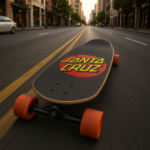
5. Santa Cruz Skateboards
Santa Cruz Skateboards is one of the best-known historic names in skateboarding, with a catalog spanning decks and complete boards.
Why it appeals: Iconic graphics, long heritage, and a broad selection.
Potential drawback: The brand’s many styles make it especially important to check the actual shape and construction of the board you’re considering.
Best for: Riders who value classic skate graphics and want a choice of deck styles.
6. Powell Peralta
Powell Peralta is renowned for its skateboarding history, team legacy, and recognizable graphics. Its current deck catalog is the best source for available shapes and models.
Why it appeals: Strong heritage and distinctive artwork.
Potential drawback: A historic pro model may not have the same dimensions or feel as another deck in the catalog.
Best for: Skaters who like classic designs and want to compare current models with a deep skateboarding lineage.
7. Girl Skateboards
Girl Skateboards is known for its pro team and longstanding place in skateboarding culture. The brand’s history includes an emphasis on skater-led identity and team storytelling.
Why it appeals: A recognizable team, influential video history, and a wide range of graphics.
Potential drawback: Team recognition alone doesn’t answer whether the deck’s shape fits you.
Best for: Skaters who want a brand with a strong team identity and established skate-media presence.
8. Chocolate Skateboards
Chocolate Skateboards is closely related to Girl in skateboarding history and has its own team, pro models, and graphic identity.
Why it appeals: Distinctive team culture and a deep catalog of recognizable board graphics.
Potential drawback: Compare individual models and dimensions; brand affiliation does not guarantee identical shapes across decks.
Best for: Riders who connect with Chocolate’s team and visual style.
9. Real Skateboards
Real Skateboards is an established skateboarding brand with pro riders and a history rooted in the skate scene.
Why it appeals: A clear skateboarding identity and familiar team presence.
Potential drawback: Availability can vary by model and location.
Best for: Riders who want an established board brand and find a deck in their preferred size.
10. Antihero Skateboards
Antihero Skateboards is known for a blunt, unconventional identity and a team with a strong reputation among skateboarders.
Why it appeals: Distinctive graphics and a team image that feels deliberately unpolished.
Potential drawback: A company’s rugged reputation doesn’t tell you how long any particular deck will last; skating style and impact matter too.
Best for: Skaters attracted to Antihero’s team culture and graphic style.
11. Zero Skateboards
Zero Skateboards is associated with a bold visual identity and a long history of team-driven skateboarding.
Why it appeals: High-impact graphics and a recognizable skate-team image.
Potential drawback: Check product availability and exact deck specs, especially if you prefer a particular shape.
Best for: Riders who enjoy Zero’s aesthetic and find a deck that fits their setup.
12. Toy Machine
Toy Machine has a distinctive identity built around cartoon-inspired art and a recognizable skate team.
Why it appeals: Playful, unmistakable graphics and a longstanding presence in skateboarding.
Potential drawback: Its artwork can be a love-it-or-leave-it affair; shape and size still deserve the final vote.
Best for: Skaters who want expressive graphics and a brand with a strong personality.
13. Almost Skateboards
Almost Skateboards is linked with founders Rodney Mullen and Daewon Song and is known for exploring deck technology as well as skateboarding culture.
Why it appeals: A history associated with technical experimentation and creative team skating.
Potential drawback: Construction varies by model; read the product information rather than assuming every deck uses the same materials or build.
Best for: Skaters curious about alternative constructions and Almost’s technical reputation.
14. April Skateboards
April Skateboards is closely connected to its team and contemporary skateboarding. Check its official catalog for current pro models and specifications.
Why it appeals: Strong rider association and a modern team identity.
Potential drawback: Team changes and product availability can happen; confirm current models before buying.
Best for: Fans of April’s team and graphics who can find a deck in their preferred dimensions.
15. Fucking Awesome
Fucking Awesome is recognized for provocative graphics and a distinctive skate-culture presence.
Why it appeals: A bold visual style and a brand identity that stands out in a rack of decks.
Potential drawback: Its aesthetic isn’t for everyone, and the graphic says nothing about whether the deck’s shape will suit your skating.
Best for: Skaters who want a more confrontational design and identify with the brand’s style.
16. Kroked Skateboarding
Kroked Skateboarding is associated with Mark Gonzales and a playful, art-forward approach to skateboarding.
Why it appeals: Distinctive graphics, creative shapes, and a personality that doesn’t take itself too seriously.
Potential drawback: Unusual shapes may feel different from a standard popsicle deck, so check the dimensions and intended use.
Best for: Skaters open to characterful graphics and shapes beyond the usual template.
17. Habitat Skateboards
Habitat Skateboards has a recognizable place in skateboarding and a history of artistic graphics and team projects.
Why it appeals: A visually distinctive identity and a roster with roots in skate culture.
Potential drawback: Current availability can vary; confirm what the brand and local shops actually stock.
Best for: Skaters who appreciate Habitat’s graphics and find a model that matches their preferred dimensions.
18. DGK Skateboards
DGK is known for a strong streetwear and skateboarding identity, with decks and apparel in its catalog.
Why it appeals: A recognizable graphic language and connection to skate culture and fashion.
Potential drawback: Don’t confuse a clothing identity with deck specifications; inspect the individual board.
Best for: Riders who like DGK’s visual style and want to coordinate a deck with their broader skate look.
19. GX100
GX100 is best known for a fast, raw approach to hill bombing and street skating. Its brand identity is closely tied to the crew’s style of riding.
Why it appeals: Strong personality and an unmistakable connection to a particular kind of high-speed skating.
Potential drawback: The brand’s image reflects a specific style; it doesn’t mean every GX100 deck is the ideal choice for every park or street setup.
Best for: Skaters who connect with GX100’s crew and high-speed skate culture.
20. Welcome Skateboards
Welcome Skateboards is recognized for unconventional graphics and shapes, including boards that depart from standard popsicle designs.
Why it appeals: Creative art and unusual shapes that can make a setup feel personal.
Potential drawback: Shape changes can affect stance and trick feel; try to inspect dimensions and profile before ordering.
Best for: Skaters who want an alternative shape or a deck that makes the rack do a double take.
A quick caveat: A brand’s official site is the best place to verify current products, but the exact professional roster may not always be listed or updated in the same way across companies. We’ve focused on recognizable brand associations rather than presenting every rider as a permanent endorsement.
🎯 Which Skateboard Brands Do Pros Use for Street, Park, and Vert?
Pros don’t always pick a board brand because it specializes in one terrain. The rider’s setup and personal preferences matter more than a label saying “street” or “park.” Still, the kind of skating you do can help narrow down what to test.
| Riding style | What riders commonly prioritize | Brands to explore |
|---|---|---|
| Street | Predictable flip response, a familiar shape, and a size that suits technical tricks | Baker, Girl, Chocolate, Real, Primitive, Zero |
| Park and transition | A stable-feling deck, suitable width, and comfortable control through turns | Santa Cruz, Powell Peralta, Element, Antihero, Kroked |
| Vert | A stable platform and a setup built for speed, transitions, and the rider’s preferred stance | Santa Cruz, Powell Peralta, Element, and other brands with appropriate deck shapes |
| Hill bombing and fast street skating | Stability and a setup chosen for speed, terrain, and control | GX100 and brands offering boards suited to the rider’s chosen setup |
| Frestyle or experimental skating | A shape and construction that serve the tricks being practiced | Almost, Welcome, and brands with alternative shapes |
These are starting points, not exclusive categories. Many pros skate street and park, and the same brand may offer several shapes. If you skate mostly street but love a wider board, you don’t need permission from the “street board” police. They are busy arguing about wheel hardness.
Choose by terrain in three steps
- Name your usual spots. Street, smooth park, rough pavement, bowls, and hills demand different levels of stability and control.
- Match deck dimensions to your preference. Don’t size a board only by copying a pro. Compare widths and other listed specs.
- Test your actual setup. Trucks and wheels also affect how a skateboard feels. If you’re changing several parts at once, it can be hard to tell which change helped.
For more gear guidance, explore our Skateboard Gear articles. The board you saw in a video may be fascinating—but what’s underneath that graphic?
🪵 Pro Skateboard Decks: Shapes, Sizes, and Construction
A pro model is usually a deck linked to a professional rider through a name, graphic, or model design. It isn’t automatically a different quality tier from every other deck in the brand’s catalog. Some brands offer special shapes or constructions; others offer the same basic construction with a rider-specific graphic.
How to compare deck specs
| Specification | What it means | Why you should care |
|---|---|---|
| Width | Distance across the deck | Affects the amount of platform under your feet and how the deck feels |
| Length | Overall deck length | Helps describe the board, but doesn’t determine comfort by itself |
| Wheelbase | Distance between truck mounting areas | Influences stance and turning feel |
| Nose and tail | Front and back kicktails | Their proportions can change how the board feels during tricks |
| Concave | Curve across the width of the deck | Affects foot placement and board feel |
| Construction | Materials and manufacturing details | May affect weight, flex, durability, or feel depending on the design |
| Shape | Overall outline and profile | Determines whether the board feels conventional or more specialized |
Not all brands list every measurement in the same way, so compare the specific product page and ask your local shop if a measurement is unclear.
What pros may look for in a deck
- Consistency from board to board: If the shape stays familiar, a replacement feels less like switching vehicles mid-commute.
- A preferred width: Pros may stick with a measurement they know and trust.
- Pop and flex: The feel of the deck underfoot can be personal; no single description fits every rider.
- Strength for their skating: Impact, landing habits, terrain, and deck construction all influence how long a board lasts.
- A personal connection: Pro-model graphics can be a way to support a rider, but the underlying board still has to work for you.
Pro model versus blank deck
| Choice | Potential advantages | Potential trade-offs |
|---|---|---|
| Pro model | Rider-linked graphic; may support a skater; often easy to identify | The graphic may cost more at retail, without changing the deck’s feel |
| Team model | Brand-wide graphic or team identity | May not feature the specific rider you follow |
| Blank deck | Simple look and often fewer branding details | Less rider-specific artwork and team storytelling |
| Specialty shape | Can suit a particular style or preference | May require adjustment and can be less versatile for some tricks |
Our practical rule: Choose the dimensions first, then decide whether you want the graphic. A board with the perfect art in the wrong shape is still the wrong board. And since deck choice is only half the story, let’s talk about the other parts pros mix and match.
🔧 Do Professional Skaters Use Matching Deck, Trucks, Wheels, and Bearings?
Not necessarily. A skateboard is a collection of components, and sponsors may cover different parts of a rider’s setup. It is common for a skater’s deck brand and truck, wheel, shoe, or bearing brand to differ.
| Component | Examples of brands | What to prioritize |
|---|---|---|
| Deck | Baker, Girl, Real, Santa Cruz | Shape, size, construction, and feel |
| Trucks | Independent, Thunder, Venture, Ace | Compatibility with deck width and preferred turning feel |
| Wheels | Spitfire, Bones, OJ | Diameter, hardness, and the terrain you ride |
| Bearings | Bones Bearings and others | Fit, maintenance, and overall condition |
| Shoes | Nike SB, Vans, Adidas Skateboarding, Etnies | Fit, grip, board feel, and the kind of skating you do |
Brand names are examples, not a required matching list. Before ordering parts, confirm truck width and deck compatibility and check the wheel size against your setup. Our skateboard gear guides cover component choices in more detail.
A simple step-by-step setup check
- Start with your deck width and shape.
- Choose trucks that fit the deck appropriately. Check the manufacturer’s sizing guidance rather than guessing from the brand name.
- Pick wheels for your terrain. Rough ground, smooth parks, and transition may call for different wheel choices.
- Check wheel clearance. Make sure the setup doesn’t cause wheel bite during turns or landings.
- Inspect the whole board after assembly. Tighten hardware appropriately, test the trucks, and roll in a safe area before skating hard.
That’s the hardware. The human side of pro sponsorship is more complicated—and often more interesting than a logo on a deck.
🤝 How Pro Skateboard Sponsorships and Team Riders Work
A sponsorship can involve product, payment, travel support, media work, or a combination. The details depend on the rider, sponsor, market, and agreement. A pro’s public image may make a sponsor visible, but not every skateboard sponsorship is a lucrative deal.
Why a company sponsors a skater
Brands may work with pros to:
- Associate products with a recognizable rider and style.
- Promote decks, shoes, clothing, or other equipment.
- Support team videos, events, and community presence.
- Reach skaters who follow that rider.
- Give a pro a platform to build a longer career in skateboarding.
In the Jenkem interview, agent Circe Wallace noted that contest wins and visibility can increase a rider’s market value. She also said, “It’s not like they are getting paid huge amounts of money,” describing the realities of skateboard sponsorships. Those comments are her perspective from working with athletes, not a full set of contract data for every skater.
Why pros stay with—or leave—a board company
A board sponsor can be personal. Wallace explained that she generally did not negotiate hardgoods sponsorships, emphasizing direct relationships between skaters and board brands. She described a good wood partner as important to where a rider fits overall—“like their label,” as summarized in the interview.
A rider might switch because of:
- A new relationship with a company.
- Changes in the rider’s career or goals.
- A better team fit.
- Product preferences or availability.
- A company’s ownership or creative direction.
- A sponsorship opportunity in another category.
Brand heritage versus corporate scale
The Jenkem interview discusses a market shaped by large groups such as Nike, Adidas, VF Corporation, and Boardriders Club, along with skate-focused brands and labels with changing ownership. Wallace’s comments describe her experience and assessment; brand structures and sponsorship arrangements can change over time.
There are two reasonable perspectives:
- Larger companies can bring reach, marketing capacity, and resources.
- Skate-focused or skater-led companies may feel more directly connected to skateboarding culture and rider relationships.
- Neither ownership model guarantees a better product or a better rider experience.
A video linked earlier in the article explores this tension through company histories, including Girl, Baker, Almost, and DC Shoes. You can revisit that perspective at #featured-video. The interesting question is not just who owns the company—it’s whether the brand’s products, team, and decisions still make sense to the people who skate.
So, should you buy the board a pro rides? Maybe. But we’d start with a more useful question: does that board fit your feet, spots, and skating?
🛒 How to Choose a Skateboard Brand That Fits Your Style
Choosing a brand is easier when you separate the deck you need from the brand identity you like. You can care about both. Just don’t let a famous rider’s setup make the decision for you.
Deck width, wheelbase, and shape
Start with the deck’s actual specifications. Width is easy to compare, but also look at wheelbase, nose and tail dimensions, and shape. Two boards with the same width can feel different.
Our try-it-first advice: If possible, hold the board and stand on it. If you’re buying online, compare the exact dimensions with a deck you already know. Our Skateboard Brand Guides are a useful place to explore brand options before you shop.
Riding style and terrain
Ask yourself:
- Where do you skate most: street, park, transition, or rough pavement?
- Do you want a familiar popsicle shape or something unconventional?
- Are you looking for a general-purpose setup or a board for a specific kind of skating?
- Does your current board feel too narrow, too wide, or just right?
Brands such as Welcome offer alternative shapes in some models, while many other brands focus heavily on standard popsicle decks. Check the individual model rather than assuming an entire brand uses one shape.
Budget, durability, and availability
We won’t list prices, but value still matters. Before choosing a board, compare the construction, included components if it’s a complete, availability of replacement parts, and how easy it will be to find the same model again.
Durability is not just a brand trait. How you skate, where you skate, how you land, and how the board is stored all affect its life. A deck that lasts one rider a long time might snap quickly under another rider’s hard impacts.
Pro model graphics versus blank decks
A pro model can be a good way to support a rider whose work you enjoy. A blank deck can be a sensible choice if you’d rather prioritize simplicity. Neither is inherently better for skating if the board construction and dimensions suit you.
Some skateboarders also prefer decks without a pro’s name or image. The linked Facebook discussion is not publicly readable without access to the group, so we can’t claim what its members concluded. But the question itself is worth considering: are you buying a shape you like, supporting a rider, or both?
A five-step way to decide
- Set your priorities: fit, durability, graphic, team connection, or all four.
- Shortlist three brands: include one you know, one with a team you admire, and one you haven’t tried.
- Compare exact specs: don’t compare one brand’s 8.25-inch deck with another brand’s 8.5-inch deck and call it a brand test.
- Check current availability: use the official catalog or a trusted skate shop.
- Ride it and take notes: record what feels good and what doesn’t. Your next choice will be sharper.
If you’re also interested in the clothes, videos, and visual language surrounding a brand, our Skateboard Fashion and Skateboard Culture sections add the wider scene around the board.
🚫 Common Myths About Pro Skateboard Brands
Myth: Pros all ride one “best” brand
Reality: Pros ride many brands, and sponsorships change. There’s no single universal pro deck.
Myth: If a pro rides it, it must be the best deck
Reality: A pro’s choice may reflect a sponsor relationship, personal feel, team fit, or business agreement. Your preferred size and shape still matter.
Myth: A pro model is always built differently
Reality: Some models have specialized shapes or construction, but many pro models are primarily a rider-linked graphic or model designation. Check the product specifications.
Myth: Independent brands always make better skateboards
Reality: Independence may matter to a skater’s values, but it does not automatically prove the quality of every product. Evaluate the deck itself and the brand’s current offerings.
Myth: Corporate ownership means a brand is no longer “for skaters”
Reality: Corporate ownership can influence strategy, but a company’s current products, team, and skateboarding activity are more informative than a label alone.
Myth: Matching every component brand gives you a better setup
Reality: A compatible setup matters; matching logos do not. Choose parts for fit, function, and feel.
✅ Quick Tips for Buying a Pro-Brand Skateboard
Use this checklist before you buy:
- ✅ Compare the actual deck dimensions, not just the brand name.
- ✅ Check whether the listing is for a deck or a complete skateboard.
- ✅ Confirm which components come with a complete and whether you’ll need to upgrade anything.
- ✅ Look for construction and shape information on the official brand or retailer page.
- ✅ Pick a pro graphic because you like the rider—not because you think it guarantees a superior deck.
- ✅ Ask a local skate shop about the feel of a shape if you’re unsure.
- ❌ Don’t assume every board in one brand’s catalog is identical.
- ❌ Don’t copy a pro’s full setup without considering your own terrain, stance, and preferences.
- ❌ Don’t treat an old team roster as proof of a current sponsorship.
Compare brands without turning it into a logo contest
A useful comparison is one deck at a time:
| Test | What to record |
|---|---|
| Board model | Exact name and graphic |
| Width and wheelbase | Use the listed measurements |
| Shape | Standard, wider, longer, or alternative |
| First impression | Stable, quick, unfamiliar, comfortable |
| After several sessions | Pop, control, wear, and whether you want the same shape again |
We started with a question about which brands the pros use. The clearer answer is that pros use many brands—but the right board for you is the one whose shape, fit, and feel make you want to skate it again tomorrow.