Support our educational content for free when you purchase through links on our site. Learn more
🛹 What Skateboard Should I Get? The Ultimate 2026 Buyer’s Guide


Ever stood in front of a wall of skateboards, paralyzed by the sheer number of choices, wondering if you’re about to buy a toy or a legitimate tool for freedom? We’ve all been there. At Skateboard Brands™, we’ve seen countless beginners drop cash on a “complete” from a big-box store, only to watch it shatter on the first curb or wobble uncontrollably because the trucks were made of cheap, bendy metal. The truth is, what skateboard you should get isn’t about the coolest graphic or the most expensive price tag; it’s about the precise marriage of your shoe size, your local terrain, and your personal skating style.
Did you know that over 80% of new skaters quit within the first month, often because their board is simply the wrong size or quality? It’s a tragedy we aim to prevent. In this guide, we’re stripping away the jargon to reveal the golden rules of deck width, the critical differences between street and transition setups, and exactly how to build a board that won’t leave you stranded. Whether you’re a 6-foot adult looking to land your first kickflip or a parent trying to figure out the right size for a 6-year-old, we’ve got the insider secrets you won’t find in a generic manual. By the end of this read, you’ll know exactly which plank to grab to turn those wobbly first steps into smooth, confident rides.
Key Takeaways
- Deck Width is King: Your shoe size is the most accurate predictor for deck width, not your height; most adults will find the sweet spot between 8.0″ and 8.25″.
- Quality Matters: Always choose a 7-ply Canadian Maple deck and avoid “toy store” boards with plastic trucks and cheap bearings that break instantly.
- Style Dictates Setup: Street skating requires narrower boards and hard wheels (52-54mm), while cruising demands wider decks and soft, large wheels (60mm+).
- Complete vs. Custom: Beginners should start with a reputable brand complete (like Element or Santa Cruz) for reliability, upgrading to a custom build once you know your specific needs.
- Safety First: A CPSC-certified helmet and knee pads aren’t just for kids; they are essential gear that keeps you skating longer and safer.
Ready to find your perfect ride?
- 👉 Shop Top Brand Completes: Amazon | Skateboard Brands™ Guides
- Find the Right Size: What Size Skateboard Should I Get?
- Browse Premium Gear: Skateboard Brands™ Gear
Table of Contents
- ⚡️ Quick Tips and Facts
- 🛹 The Evolution of the Plank: A Brief History of Skateboard Types
- 🤔 Complete Skateboard vs. Custom Build: Which Path Should You Take?
- 📏 The Golden Rule: How to Choose the Right Skateboard Deck Width for Your Feet
- 🎨 Decoding the Deck: Concave, Shape, and Wood Quality Explained
- 🛞 Beyond the Board: Choosing the Perfect Trucks, Wheels, and Bearings
- 🏙️ Street Skating: The Ultimate Setup for Technical Tricks and Urban Adventures
- 🌊 Transition, Bowl, and Halfpipe: Mastering the Art of Flow and Air
- 🌳 Cruising and Longboarding: The Chill Way to Get Around Town
- 🏫 Skateboards for Schools, Workshops, and Group Lessons
- 🛡️ Safety First: Why Stylish Helmets and Protectors Are Actually Cool
- 🎛️ Building Your Dream Ride: How to Use a Skateboard Configurator Like a Pro
- 🚀 7 Essential Steps to Buying Your First Skateboard Without Regret
- 🧠 Common Mistakes New Skaters Make When Choosing Gear
- 💡 Quick Tips and Facts
- 🏁 Conclusion
- 🔗 Recommended Links
- ❓ FAQ
- 📚 Reference Links
⚡️ Quick Tips and Facts
Before you drop a single dime or step onto a board, let’s hit the pause button on the overwhelm. We’ve seen too many new skaters buy a “toy” from a big-box store, only to watch it shatter on the first curb. Here is the golden truth we at Skateboard Brands™ live by: Deck width is king, not length.
- The “One-Size-Fits-All” Myth: There is no such thing. A 7.5″ deck feels like a feather to a 6-foot rider, while an 8.5″ feels like a canoe to a 5-foot kid.
- Material Matters: If it’s not 7-ply Canadian Maple, walk away. Bamboo and plastic have their place (cruisers), but for learning tricks, you need the snap of real wood.
- The “Local Shop” Rule: As the experts in our community often say, buying from a mall often means buying a “disposable” board. Local skate shops (LSS) offer boards that actually survive a session.
- Don’t Get Them Wet: Water is the enemy of maple. One soak, and your board warps, delaminates, and loses its pop.
- The Sweet Spot: The majority of modern skaters, from beginners to pros, ride between 8.0″ and 8.25″. It offers the perfect balance of stability for landing and lightness for flipping.
If you are wondering, “What size skateboard should I get for a 6-year-old boy?” (or any specific age), we have a dedicated deep dive on that exact topic here: What Size Skateboard Should I Get for a 6 Year Old Boy? 🛹 (2025).
🛹 The Evolution of the Plank: A Brief History of Skateboard Types

To understand what skateboard you should get, you have to know where we came from. Skateboarding isn’t just a sport; it’s a cultural evolution.
In the 1950s, surfers in California wanted to “surf the streets” when the waves were flat. They nailed clay wheels to wooden boxes. Fast forward to the 70s, and the invention of urethane wheels changed everything. Suddenly, you could carve, slide, and actually stick a landing. This era birthed the Old School shape: wide, flat noses, and a distinct asymetrical look perfect for pools and ramps.
Then came the 80s and 90s. The Street Revolution. Skaters moved from empty pools to urban obstacles—stairs, rails, and ledges. The boards got narrower, the tails got steeper, and the pops got higher. This is the era of the modern Popsicle shape (symetrical with dual kicktails) that dominates the streets today.
Today, we have a hybrid world. You have Longboards for cruising, Cruisers for commuting, and Street Decks for technical tricks. But the core question remains: Which one fits your lifestyle?
🤔 Complete Skateboard vs. Custom Build: Which Path Should You Take?
This is the first major fork in the road. Do you buy a Complete (pre-asembled) or build a Custom (parts picked individually)?
The Case for Completes
✅ Pros:
- Convenience: Grab and go. No need to know truck widths or bearing sizes.
- Cost-Effective: Brands buy parts in bulk, making the total price lower than buying parts separately.
- Quality Control: Reputable brands (like Element, Santa Cruz, or Plan B) ensure the parts match the deck’s performance.
❌ Cons:
- Generic Parts: The wheels and bearings might be “okay” but not great. You might want to upgrade them later.
- Limited Customization: You get the color and brand you like, but the truck hardness or wheel durometer is fixed.
The Case for Custom Builds
✅ Pros:
- Tailored Performance: You choose exactly how hard the bushings are, how soft the wheels are, and the exact truck width.
- Longevity: When a part breaks, you only replace that part, not the whole board.
- The “Builder” High: There is a unique satisfaction in assembling your own ride.
❌ Cons:
- Higher Upfront Cost: Buying individual parts usually costs 20-30% more.
- Knowledge Required: You need to know what you’re doing. Buy the wrong truck width, and your board will feel terrible.
Our Verdict: If you are a total beginner, start with a high-quality Complete from a reputable brand. Once you know your style (street vs. park), upgrade to a custom build.
👉 CHECK PRICE on:
- Santa Cruz Complete Skateboard: Amazon | Santa Cruz Official
- Element Complete Skateboard: Amazon | Element Official
- Plan B Complete Skateboard: Amazon | Plan B Official
📏 The Golden Rule: How to Choose the Right Skateboard Deck Width for Your Feet
We cannot stress this enough: Width is the most critical factor. Length and wheelbase matter, but width dictates how the board feels under your feet.
The Shoe Size Guide
While height is a factor, your shoe size is the most accurate predictor of deck width.
| Shoe Size (US Men) | Recommended Deck Width | Best For |
|---|---|---|
| Under 6 | 7.0″ – 7.5″ | Kids, small feet, technical flip tricks |
| 6 – 8 | 7.5″ – 8.0″ | Teens, average adults, street skating |
| 8 – 10 | 8.0″ – 8.25″ | The Sweet Spot, all-around, transition |
| 10+ | 8.25″ – 8.5″+ | Larger feet, transition, cruising, stability |
Note: These are guidelines, not laws. If you have small feet but love cruising, go wider. If you have big feet but want to do kickflips, go narrower.
The “Overhang” Test
A good rule of thumb is that your feet should hang off the edge of the board by about 1/4 to 1/2 inch on each side.
- Too Wide: Your feet are fully on the board. You will struggle to flip the board because it feels heavy.
- Too Narrow: Your feet are hanging off too much. You will feel unstable and lack control.
For more specific age-based sizing, check out our guide on What Size Skateboard Should I Get for a 6 Year Old Boy? 🛹 (2025).
🎨 Decoding the Deck: Concave, Shape, and Wood Quality Explained
You’ve picked a width, but now you need to understand the shape. This is where the magic happens.
Concave: The Grip
Concave is the curve from the rail (edge) to the center of the board.
- Low Concave: Flatter. Easier to stand on, great for cruising and beginners. Less “lock-in” for your feet.
- Medium Concave: The standard. Good balance of control and comfort.
- High/W-Shape Concave: Deep curves. Your feet lock into place, allowing for aggressive turning and flip tricks. Brands like Enjoi and Girl are famous for their distinct concaves.
The Wood: 7-Ply Maple
Almost every performance skateboard deck is made of 7-ply Canadian Maple.
- Why Maple? It has the perfect balance of flexibility (pop) and durability.
- The Press: The plies are glued in a cross-grain pattern (each layer perpendicular to the one below) to prevent warping.
- Alternatives: Some brands use Bamboo (more flex, eco-friendly) or Carbon Fiber (stiffer, lighter), but for learning, stick to maple.
Nose vs. Tail
Modern decks are symetrical (Popsicle shape). The nose and tail are the same size, allowing you to ride “regular” (left foot forward) or “gofy” (right foot forward) without changing the board.
🛞 Beyond the Board: Choosing the Perfect Trucks, Wheels, and Bearings
A deck is just a plank without these three components. Let’s break them down.
Trucks: The Turning Mechanism
Trucks are the metal T-shaped pieces that hold the wheels.
- Width Match: The truck width should match your deck width within 1/4 inch. If you have an 8.0″ deck, get 8.0″ or 7.75″ trucks.
- Brands: Independent (the gold standard), Thunder (lighter, great for street), and Ace (smooth turning).
- Bushings: The rubber cushions. Softer bushings = easier turning. Harder bushings = more stability.
Wheels: The Ride Quality
Wheels are defined by Size (diameter) and Durometer (hardness).
- Street/Park: 52mm – 56mm, 9a – 101a (Hard). These slide easily and pop high.
- Cruising/Street: 56mm – 60mm, 85a – 90a (Softer). These absorb cracks and rough pavement.
- Brands: Spitfire (F4 or Formula Four), Bones (Super Reds or STF), Orangatang (for cruising).
Bearings: The Spin
Bearings allow the wheels to spin.
- ABEC Rating: Don’t get fooled by ABEC 9. For skating, ABEC 5 or ABEC 7 is plenty. The brand matters more than the rating.
- Top Picks: Bones Swiss (premium), Bones Reds (best value), Skate Warehouse (budget).
- Maintenance: Keep them dry! Water rusts bearings.
👉 CHECK PRICE on:
- Independent Stage 1 Trucks: Amazon | Independent Official
- Spitfire Formula Four Wheels: Amazon | Spitfire Official
- Bones Reds Bearings: Amazon | Bones Bearings Official
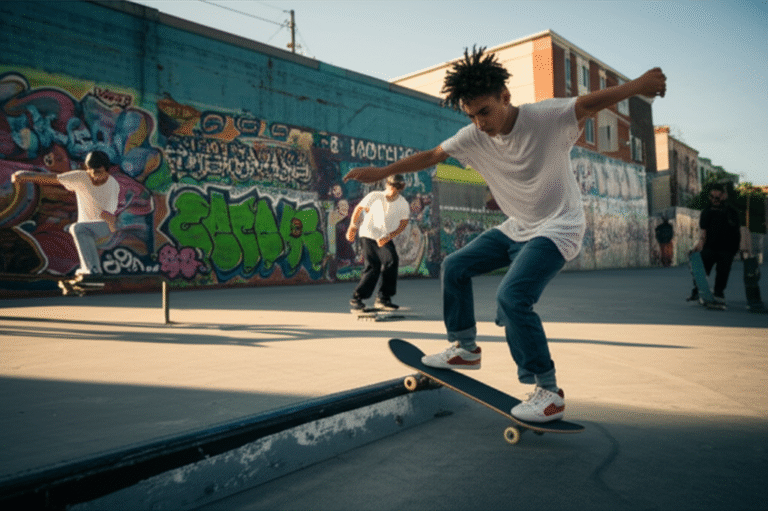
🏙️ Street Skating: The Ultimate Setup for Technical Tricks and Urban Adventures
Street skating is about technicality. You are skating stairs, rails, ledges, and curbs.
The Ideal Setup:
- Deck: 7.75″ – 8.25″ (Narrower for flip tricks, wider for stability).
- Trucks: Medium width, slightly tighter bushings for stability on rails.
- Wheels: 52mm – 54mm, 9a-101a. Hard and small to prevent wheel bite and allow slides.
- Grip Tape: Standard black, maybe with a hole cut for the tail if you do “tail slides.”
Why this works: A smaller, harder wheel setup makes the board lighter, allowing you to flip it faster. The hard wheels slide effortlessly on concrete and metal.
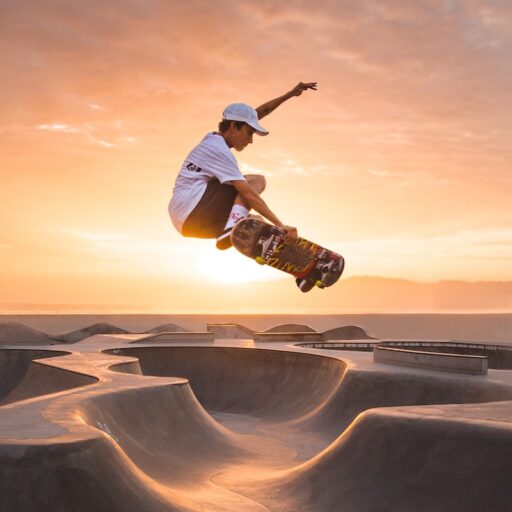
🌊 Transition, Bowl, and Halfpipe: Mastering the Art of Flow and Air
Transition skating (pools, bowls, ramps) is about flow and air. You need a board that holds you in the curve.
The Ideal Setup:
- Deck: 8.25″ – 8.5″+ (Wider for stability when pumping and landing).
- Trucks: Wider trucks to match the deck.
- Wheels: 56mm – 60mm, 95a-9a. Slightly larger and softer to roll over the coping and maintain speed.
- Concave: Often higher concave to lock your feet in during deep carves.
Why this works: The wider deck gives you a larger platform to land on after an air. The slightly softer wheels grip the transition better, preventing slips when you are carving hard.
🌳 Cruising and Longboarding: The Chill Way to Get Around Town
Not everyone wants to do kickflips. Some of us just want to get from A to B without hitting every crack in the sidewalk.
The Ideal Setup:
- Deck: Cruiser (shorter, often with a kicktail) or Longboard (longer, 30″+).
- Trucks: Reverse kingpin trucks (on longboards) for a surf-like feel.
- Wheels: 60mm – 70mm+, 78a-85a. Soft and large. This is non-negotiable for a smooth ride.
- Shape: Often has a “pintail” or drop-through design for lower center of gravity.
Brands to Check: Landyachtz (Dinghys for cruising), Sector 9 (Longboards), Retrospec (Budget cruisers).
👉 CHECK PRICE on:
- Landyachtz Dinghy Cruiser: Amazon | Landyachtz Official
- Sector 9 Longboard: Amazon | Sector 9 Official
🏫 Skateboards for Schools, Workshops, and Group Lessons
Skateboarding is a fantastic tool for youth development, teaching resilience, balance, and community. Many schools and workshops are adopting skate programs.
Key Considerations for Bulk Buying:
- Durability: Look for 7-ply maple decks that can withstand heavy use.
- Size Variety: You need a range of sizes (7.0″ to 8.5″) to fit different ages and heights.
- Safety: Ensure the program includes helmets and pads.
- Brands: Element and Zero often have “blank” or simple graphic decks that are cost-effective for groups.
Why it works: A structured skate program can keep kids off the streets and engaged in a positive, active hobby.
🛡️ Safety First: Why Stylish Helmets and Protectors Are Actually Cool
Let’s bust a myth: Helmets are not uncool. In fact, the coolest skaters we know wear them.
Helmets
- Certification: Look for CPSC (US) or EN1078 (Europe) certification.
- Style: Brands like Triple 8 and TSG make helmets that look like streetwear. Some even have removable covers to change the look.
- Fit: It must be snug. If it wobbles, it’s useless.
Pads
- Knee Pads: Essential for learning to fall. They prevent “road rash” and give you the confidence to try new tricks.
- Elbow & Wrist Guards: Great for beginners who tend to fall on their hands.
Our Advice: Wear them until you are comfortable. Once you are confident, you can choose to go without, but always wear a helmet when trying new, dangerous tricks.
👉 CHECK PRICE on:
- Triple 8 Certified Helmet: Amazon | Triple 8 Official
- TSG Evolution Helmet: Amazon | TSG Official
- 187 Killer Pads: Amazon | 187 Official
🎛️ Building Your Dream Ride: How to Use a Skateboard Configurator Like a Pro
Many online shops (like Skatedeluxe, JIB, or Warehouse Skateboards) offer a Skateboard Configurator. This tool lets you build your board piece by piece.
Step-by-Step Guide:
- Select Deck: Choose your brand, width, and graphic.
- Add Grip Tape: Choose black or clear (clear shows the wood, black hides dirt).
- Choose Trucks: Match the width to your deck.
- Pick Wheels: Decide on size and hardness based on your style.
- Select Bearings: Choose your preferred brand.
- Hardware: Usually included, but you can choose colored bolts for style.
Pro Tip: If you are unsure, use the “Recommended” settings in the configurator. They are usually pre-set for a balanced ride.
🚀 7 Essential Steps to Buying Your First Skateboard Without Regret
Ready to buy? Follow this checklist to avoid buyer’s remorse.
- Determine Your Style: Street, Park, or Cruise? This dictates everything.
- Measure Your Feet: Use the shoe size chart above.
- Set a Budget: A good complete is $10-$130. Don’t buy a $30 “toy.”
- Pick a Reputable Brand: Stick to Santa Cruz, Element, Plan B, Girl, Zero, etc.
- Check the Parts: Ensure the trucks and wheels are not “toy store” quality.
- Buy from a Local Shop or Specialist: Support local or buy from a dedicated skate site.
- Get Safety Gear: Don’t skip the helmet.
🧠 Common Mistakes New Skaters Make When Choosing Gear
- Buying Based on Graphics: Yes, the art is cool, but a 7.0″ deck won’t work for a size 12 shoe.
- Going Too Wide: Thinking “bigger is better.” A board that is too wide is hard to flip.
- Ignoring Wheel Hardness: Using soft wheels on concrete for street tricks (they will drag) or hard wheels on rough asphalt (you will feel every crack).
- Buying “Complete” from a Mall: These often have plastic trucks and cheap bearings that break immediately.
- Not Tightening Trucks: Loose trucks make the board wobbly. Tighten them until they turn but don’t wobble.
💡 Quick Tips and Facts
Let’s recap the most critical takeaways from our team:
- The “8.0” Rule: If you are an average adult and unsure, buy an 8.0″ deck. It works for 90% of people.
- Truck Width: Always match your truck width to your deck width.
- Wheel Size: 52-54mm for street, 56-60mm for transition/cruising.
- Maintenance: Check your trucks and bearings regularly. Clean your bearings if they get wet.
- Local Community: Join a local skate group. They will give you the best advice and help you fix your board.
Remember, the best skateboard is the one you actually ride. Don’t get stuck in “analysis paralysis.” Pick a board, get out there, and start skating!
🏁 Conclusion

So, what skateboard should you get? The answer isn’t a single brand or a specific model number. It’s a combination of your foot size, your skating style, and your personal goals.
If you are a beginner looking to learn tricks, start with a high-quality complete from a brand like Element or Santa Cruz in the 8.0″ to 8.25″ range. If you just want to cruise to the store, look for a cruiser with soft wheels. If you are a larger rider or want to hit the ramps, go wider (8.25″+).
We’ve covered the history, the specs, the parts, and the safety gear. The only thing left to do is get on the board. Don’t let the fear of choosing the “wrong” board stop you. Even the pros started with a board that wasn’t perfect.
Final Recommendation:
- Best All-Around Complete: Santa Cruz Classic Dot (8.0″ or 8.25″)
- Best Budget Complete: Element Section (8.0″)
- Best Cruiser: Landyachtz Dinghy
- Best for Street: Plan B Team (8.0″)
Remember, the journey is more important than the gear. Skate hard, stay safe, and keep pushing!
🔗 Recommended Links
👉 Shop Top Skateboard Brands & Gear:
- Santa Cruz Skateboards: Amazon | Santa Cruz Official
- Element Skateboards: Amazon | Element Official
- Plan B Skateboards: Amazon | Plan B Official
- Independent Trucks: Amazon | Independent Official
- Spitfire Wheels: Amazon | Spitfire Official
- Bones Bearings: Amazon | Bones Official
- Triple 8 Helmets: Amazon | Triple 8 Official
Recommended Books:
- The Skateboarder’s Bible by Steve Rocco: Amazon
- Skateboarding: The Ultimate Guide by Steve Olson: Amazon
❓ FAQ

What to look for when buying a skateboard deck?
When buying a deck, focus on width first. Match it to your shoe size. Look for 7-ply Canadian Maple for durability and pop. Check the concave shape to ensure it feels comfortable under your feet. Avoid decks made of plastic or cheap wood composites if you plan on doing tricks.
Read more about “🛹 Where to Buy Skateboards for Beginners: 15+ Top Picks (2026)”
How do I choose a skateboard?
Start by deciding your skating style (street, park, or cruise). Then, determine the deck width based on your shoe size. Choose a complete from a reputable brand if you are a beginner, or build a custom setup if you know your specific needs. Always prioritize quality parts over flashy graphics.
Read more about “🛹 Top 15 Skateboard Brands for Street, Park & Vert (2026)”
What is a beginner skateboard?
A beginner skateboard is typically a complete setup with a 7.75″ to 8.25″ deck, standard 52-54mm hard wheels, and reliable Independent or Thunder trucks. It should be durable enough to withstand falls and versatile enough to learn basic tricks like the ollie. Avoid “toy” store boards with plastic trucks.
Read more about “💸 What is the Expensive Skateboard? (2026)”
How do I know what skateboard to get?
Ask yourself: Where will I skate? If it’s streets and stairs, go for a narrower, harder-wheled setup. If it’s parks and bowls, go wider with slightly softer wheels. If it’s just cruising, look for a cruiser or longboard with soft, large wheels. Your shoe size is the best indicator for deck width.
Read more about “🛹 The Ultimate Baker Board Guide: 30+ Decks Reviewed (2026)”
What skateboard brand is best for beginners?
Brands like Element, Santa Cruz, Plan B, and Girl are excellent for beginners. They offer high-quality completes that are ready to ride out of the box. These brands use genuine maple and reliable components, ensuring a safe and enjoyable learning experience.
Read more about “🛹 7 Hidden Skateboard Secrets Pros Won’t Tell You (2026)”
Which skateboard deck width is right for my height?
Height is a factor, but shoe size is more accurate.
- Under 5’0″: 7.0″ – 7.5″
- 5’0″ – 5’6″: 7.5″ – 8.0″
- 5’6″ – 6’0″: 8.0″ – 8.25″
- Over 6’0″: 8.25″ – 8.5″+
However, personal preference plays a huge role. Try different widths if possible.
Read more about “🛹 How Do I Know What Skateboard Size to Get? (2026)”
Are expensive skateboard brands worth the investment?
Yes, but not because of the price tag alone. Expensive brands often use higher quality maple, better pressing techniques, and more durable graphics. A $10 board from a pro brand will last longer and perform better than a $30 board from a generic brand. The investment is in durability and performance.
Read more about “The 15 Best High-End Skateboard Brands to Ride in 2026 🛹”
What are the most durable skateboard brands for street skating?
For street skating, durability is key. Brands like Zero, Plan B, and Girl are known for their tough decks that can withstand the abuse of grinds and flips. Independent trucks are also renowned for their strength and longevity in street environments.
Read more about “💀 Deathwish Skateboards: The Ultimate 2026 Review & Top 10 Decks”
📚 Reference Links
- Warehouse Skateboards: Skateboard Decks Buying Guide – A comprehensive guide on deck sizing and types.
- Skateboard Brands™: Skateboard Brand Guides – In-depth reviews of top brands.
- Skateboard Brands™: Skateboard Gear – Detailed guides on trucks, wheels, and bearings.
- Skateboard Brands™: Skateboard Culture – Exploring the history and community of skateboarding.
- Skateboard Brands™: Skateboard Fashion – How skate culture influences style.
- Skateboard Brands™: What Size Skateboard Should I Get for a 6 Year Old Boy? 🛹 (2025) – Specific sizing advice for kids.
- Skatedeluxe: Skateboards For Beginners – Recommendations and checklists for new skaters.
- Retrospec: 7 Types of Skateboards and Their Benefits – Overview of different skateboard types.