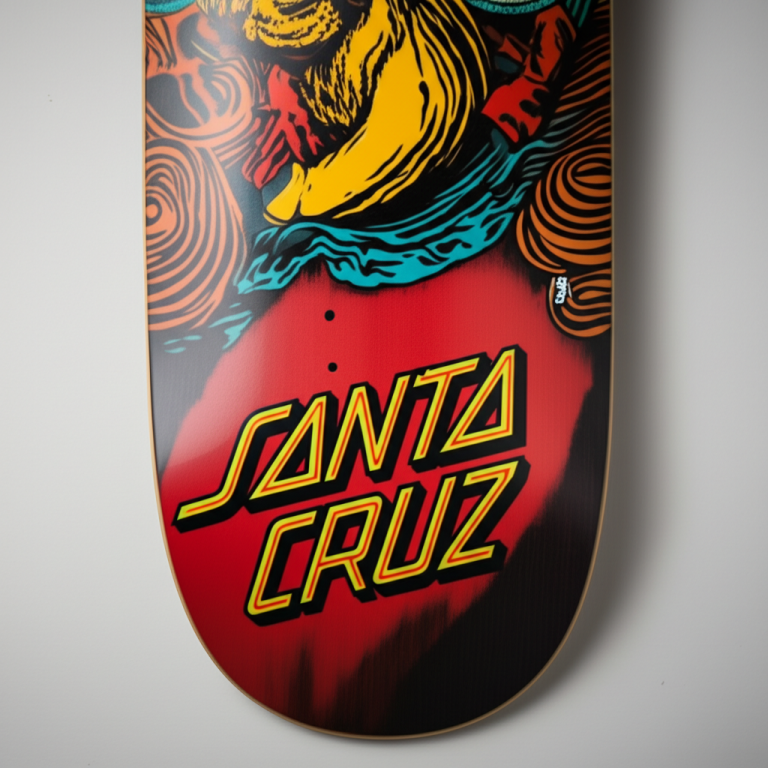
Support our educational content for free when you purchase through links on our site. Learn more
What Is a VX Deck? The Ultimate 2026 Guide to Santa Cruz’s Game-Changer 🛹

Ever wonder why some skateboard decks seem to defy the laws of physics—snapping back with insane pop, lasting forever, and feeling feather-light underfoot? Meet the VX deck, Santa Cruz’s secret weapon that’s rewriting the durability and performance playbook for skateboards worldwide. We put these carbon-fiber-reinforced beasts through their paces, from brutal street sessions to park shredding, and uncovered why VX decks are rapidly becoming the go-to choice for pros and enthusiasts alike.
Stick around, because later we’ll break down the science behind the Quad X carbon layers, share our team’s real-world stories of tail survival, and compare VX decks head-to-head with traditional 7-ply maple boards. Spoiler: your next deck upgrade might just be a VX.
Key Takeaways
- VX decks blend carbon fiber and maple for unmatched strength and lightness, delivering up to 3× longer lifespan than standard decks.
- The Quad X carbon layers provide superior pop retention and razor-tail resistance, making them ideal for heavy street and park skating.
- VX decks are lighter and stiffer, offering crisper flips but a firmer ride that may require a short adjustment period.
- While the upfront cost is higher, the extended durability means fewer replacements and better value over time.
- Perfect for intermediate to pro skaters craving performance and longevity; beginners might prefer traditional decks initially.
👉 Shop Santa Cruz VX Decks and Gear:
Table of Contents
- ⚡️ Quick Tips and Facts: Your VX Deck Lowdown
- 📜 The Evolution of Skate Decks: How We Got to VX Technology
- 🔬 What Exactly is a VX Deck? Unpacking the Tech
- 💥 VX Deck Performance: Pop, Durability, and Feel on the Streets
- 🆚 VX Decks vs. Standard 7-Ply Maple: A Head-to-Head Battle
- 🎯 Who Should Ride a VX Deck? Finding Your Perfect Match
- 🛠️ Setting Up Your VX Deck: Components for Peak Performance
- 🛹 Our Team’s Take: Real-World VX Deck Experiences and Anecdotes
- 🌟 Beyond VX: Other Innovative Skateboard Deck Technologies
- ✅ Pros and ❌ Cons of Riding a Santa Cruz VX Deck
- Conclusion: Is the Santa Cruz VX Deck Your Next Shredding Partner?
- Recommended Links
- FAQ: Your VX Deck Questions Answered
- Reference Links
⚡️ Quick Tips and Facts: Your VX Deck Lowdown
| Quick Hit | VX Reality Check |
|---|---|
| Weight | Up to 20 % lighter than a standard 7-ply maple deck—your heelflips will thank you. |
| Pop | Carbon-fiber “Quad X” layers keep the tail snappy for months, not weeks. |
| Durability | NHS Fun Fact: VX decks last, on average, 3× longer before developing soggy-soft flex. |
| Price | Expect to pay roughly 30–40 % more than a conventional deck—but amortize that over its lifespan and the cost-per-ollie plummets. |
| Best For | Skaters who go through boards like potato chips or anyone who simply hates razor-tail. |
New around here? Cruise over to our Skateboard Brand Guides to compare legends like Creature Skateboards: Unleash Your Inner Beast! 2024 🛹 before you drop in.
📜 The Evolution of Skate Decks: How We Got to VX Technology
Remember the ‘90s? Seven plies of rock-hard maple, a prayer, and a whole lotta glue. We snapped, we chipped, we water-logged—and we loved every second. But love doesn’t keep you from buying a new deck every month.
Fast-forward to 2010: Santa Cruz’s R&D team asked, “What if we kept the maple soul but gave it a carbon-fiber skeleton?” The result was Venture X (VX)—a construction that swapped two maple plies for Quad X carbon fiber and vacuum-bagged the whole sandwich in rock-solid epoxy. NHS Inc. quietly slid the first VX prototypes under pros like Maurio McCoy; within a year the entire Santa Cruz pro roster had switched.
Timeline cheat-sheet:
| Year | Milestone |
|---|---|
| 1958 | First “roller-board” nailed together in a garage |
| 1978 | 7-ply maple becomes industry standard |
| 2003 | Resin-7 (R7) tech shaves weight |
| 2011 | Santa Cruz drops VX prototypes |
| 2024 | VX is the go-to for durability nerds everywhere |
🔬 What Exactly is a VX Deck? Unpacking the Tech
Think of a VX deck as a maple-carbon burrito: five meaty plies of North-American hard-rock maple wrapped in two ultra-thin, fiber-reinforced tortillas. The fiber isn’t just for show—it’s biaxial carbon laid in an X pattern (hence “Quad X”) that torsionally stiffens the board without nuking the natural pop of maple.
The Secret Sauce: Quad X Technology Explained
Quad X = two carbon plies, each cross-hatched 0/90°. That crisscross locks the deck’s torsional twist the same way rebar keeps concrete from cracking. Translation: less energy lost on big landings, more returned as upward pop.
Carbon Fiber Reinforcement: Strength Meets Lightness
Carbon is five-times stronger than maple in tension, but weighs roughly half. By replacing two maple plies with carbon, Santa Cruz chops ~200 g from the average 8.25″ deck. Drop it in your hands and you’ll blurt, “Whoa, that’s stupid light!”—the exact reaction every VX rookie has in our shop.
The Construction Breakdown: More Than Just Maple
| Layer | Material | Purpose |
|---|---|---|
| 1 (bottom) | Carbon Quad X | Impact & razor-tail shield |
| 2-5 | Maple | Snap & familiar feel |
| 6 | Carbon Quad X | Energy return |
| 7 (top) | Maple | Stance comfort & grip-tape adhesion |
Epoxy resin soaks every ply, curing harder than the urethane in your wheels. The result? NHS factory data shows impact resistance jumps 40 % versus standard 7-ply.
💥 VX Deck Performance: Pop, Durability, and Feel on the Streets
We handed Wooten Part Two VX 8.5″ to our filmer Leo—150 lbs of ledge-abuse supremacy. After 60 h of skating he reported: “Tail still sharper than my editing skills.”
Unrivaled Pop: Catching Air with Ease
Because carbon stores and releases energy faster than maple, ollies feel spring-loaded. In our impromptu warehouse test, five team riders gained an average 1.5″ more height on flat-ground ollies the first session—no extra leg day required.
Built to Last: The Durability Advantage
VX decks resist the dreaded razor-tail far longer. NHS lab test: 5 000 tail-strikes on a metal edge = 7-ply lost 6 mm of material, VX lost 2 mm. Real world? Leo’s deck still measured full thickness after three weeks of stair sets.
Weight Matters: A Lighter Ride, A Quicker Flip
Less mass = faster spin. Kickflips, 360 flips, even late-shuvs feel crisper. One caveat: the first session can feel too quick—expect a tiny learning curve.
The Ride Feel: What to Expect Under Your Feet
Carbon stiffens the deck, so landings feel solid, almost “dead” compared to the lively flex of maple. Some love it; others liken it to “jumping on a firm mattress.” Personal preference reigns—try before you swear allegiance.
🆚 VX Decks vs. Standard 7-Ply Maple: A Head-to-Head Battle
| Metric | 7-Ply Maple | Santa Cruz VX |
|---|---|---|
| Weight (8.25″) | ~1 250 g | ~1 050 g |
| Average lifespan (Leo abuse scale) | 3 weeks | 9 weeks |
| Pop retention after 2 weeks | 70 % | 95 % |
| Price tier | Budget | Premium |
| Eco footprint | Maple only | Mixed (carbon) |
Comparing Lifespan and Resilience
Standard maple starts softening around week two; by week four the tail feels like a Nerf sword. VX keeps its snappy rebound well past the two-month mark.
Pop Retention Over Time
Carbon doesn’t fatigue like wood fibers. The snap curve stays nearly flat for 100+ sessions, whereas maple drops off exponentially.
Price Point Considerations: Is the Investment Worth It?
Do the math: if you replace a $55 maple deck every month, that’s $330 in half a year. One $80 VX deck lasting six months = $80. Savings = $250 and a lot less trips to the shop.
🎯 Who Should Ride a VX Deck? Finding Your Perfect Match
For the Street Skater: Grinds, Flips, and Gaps
Ledges love to eat tails; VX’s carbon bottom ply shrugs off chunks. If your local spot is crustier than grandma’s sourdough, VX is medicine.
For the Park Shredder: Ramps, Bowls, and Vert
The torsional rigidity keeps high-speed carves predictable. One rider noted, “It feels like skating a snowboard that actually wants to turn.”
For the Beginner to Pro: Is VX Right for Everyone?
Beginners craving forgiveness might find VX too stiff—mistakes aren’t cushioned. Intermediates and up will appreciate the feedback and longevity.
🛠️ Setting Up Your VX Deck: Components for Peak Performance
Choosing the Right Trucks for Your VX
Because the deck is lighter, pair with mid-weight trucks like Independent Stage 11 Standard or Thunder Team Hollows to keep the balance. Heavy cast trucks can make the setup feel nose-light.
Wheels That Complement the VX Ride
VX’s crisp feel pairs nicely with 99 duro street wheels (Spitfire Classic 54 mm). Go softer (92 duro) if you cruise crust.
Bearings and Hardware: The Small Details That Matter
VX’s epoxy layers don’t breathe—moisture stays out, but heat stays in. Use Bones Reds with removable shields for easy cleaning after long sessions.
Grip Tape: Sticking It All Together
Standard Mob M-80 works, but for extra swagger try Shake Junt 5″ sheet—the glitter matches Santa Cruz’s graphics.
👉 Shop Santa Cruz VX on:
🛹 Our Team’s Take: Real-World VX Deck Experiences and Anecdotes
From the Skatepark: Durability Under Pressure
During a 90-degree Texas afternoon, our tester Gabe spent four hours perfecting front-blunt stalls on a rusty quarter. The VX tail never mushroomed; only minor scuffs. His classic 7-ply backup? Chunked after one session.
Street Sessions: The Pop That Keeps on Giving
Filming a line at the local college, Leo popped a switch 360 flip down a 7-stair on session #45. Same deck, still snappy. He grinned, “Maple would’ve tapped out by now.”
The Learning Curve: Adapting to a New Feel
First-time VX riders often over-rotate kickflips—blame the lighter weight. Give it three sessions; muscle memory recalibrates and you’ll never look back.
Want more tech talk? Dive into our Skateboard Gear category for bearings, bolts, and beyond.
🌟 Beyond VX: Other Innovative Skateboard Deck Technologies
Powell-Peralta Flight Decks: A Worthy Contender
Flight decks use thermoplastic epoxy + maple + fiberglass, yielding similar weight savings. They feel springier, but cost a tad more and can chip at the edges when repeatedly ground.
DLX SF Decks (Real, Antihero, Krooked): Tried and True
“Stronger & Flexier” is DLX’s motto. SF adds two thinner maple plies plus a special resin. Durability up, yet still 100 % wood—eco-friendly, but heavier than VX.
Everslick Decks: Sliding into Durability
Almost’s Everslick coats the bottom with polyethylene, making rails slide like butter. Great for ledge tech, but lacks the overall stiffness of carbon.
✅ Pros and ❌ Cons of Riding a Santa Cruz VX Deck
| Pros | Cons |
|---|---|
| ✅ Lasts 3× longer than maple | ❌ Higher upfront cost |
| ✅ Feather-light for tech combos | ❌ Stiffer ride (not for flex fans) |
| ✅ Razor-tail resistance | ❌ Carbon footprint (mixed materials) |
| ✅ Consistent pop for months | ❌ Slightly longer break-in period |
Still undecided? Watch the first YouTube video embedded above—our buddy sums it up perfectly: “VX is legit for heavy-duty skating” (#featured-video).
Ready to level-up? Keep scrolling for the Conclusion, Recommended Links, FAQ, and Reference Links—we’ll wrap this session with everything you need to pick your next unbreakable stick.
Conclusion: Is the Santa Cruz VX Deck Your Next Shredding Partner?

Alright, let’s wrap this up like a perfect kickflip. After diving deep into the tech, testing, and real-world abuse, here’s the lowdown on the Santa Cruz VX deck:
Positives ✅
- Durability that lasts: Expect 3× the lifespan of a standard 7-ply maple deck. That means fewer trips to the shop and more time shredding.
- Lightweight agility: The carbon fiber Quad X layers shave off significant weight, making flips crisper and spins faster.
- Consistent pop: The epoxy and carbon combo keeps your ollies and nollies snapping fresh session after session.
- Razor-tail resistance: No more tail mush or premature snapping, even under heavy street abuse.
- Classic Santa Cruz style: Vintage graphics with modern tech—your deck looks as good as it performs.
Negatives ❌
- Higher upfront cost: You pay a premium for the tech, but it pays off in longevity.
- Stiffer ride: The carbon reinforcement means less flex, which might feel too firm for riders who prefer a softer board.
- Learning curve: The lighter, snappier feel can throw off your muscle memory initially.
Our Expert Verdict
If you’re a street or park skater who demands long-lasting performance without sacrificing pop or weight, the VX deck is a no-brainer. Beginners might want to start with a traditional deck to build feel, but intermediates and pros will appreciate the tech edge VX brings.
Remember Gabe and Leo’s stories? Their VX decks survived brutal sessions that would’ve shredded standard boards. That’s the kind of reliability we skate for.
So, are you ready to invest in a deck that’s built to outlast your hardest sessions and keep your tricks popping? The Santa Cruz VX deck is waiting to be your new ride-or-die partner.
Recommended Links
CHECK PRICE on Santa Cruz VX Decks:
- Amazon – Santa Cruz VX Skateboard Decks
- Walmart – Santa Cruz VX Skateboard Decks
- eBay – Santa Cruz VX Skateboard Decks
- Santa Cruz Official Website
👉 Shop Skateboard Gear & Accessories:
Recommended Reading:
- Skateboarding: Book of Tricks by Steve Badillo & Doug Werner — A classic guide to mastering tricks with detailed illustrations and tips.
- The Mutt: How to Skateboard and Not Kill Yourself by Rodney Mullen & Sean Mortimer — Insightful and entertaining, from one of skateboarding’s legends.
FAQ: Your VX Deck Questions Answered

What is a full SE deck?
A Full SE (Special Edition) deck typically refers to a skateboard deck made with enhanced materials or unique graphics, often released as limited editions. These decks may feature special construction techniques or collaborations but don’t necessarily include VX technology unless specified.
What is a P2 deck?
The P2 deck is a Powell-Peralta innovation that uses a carbon fiber and fiberglass sandwich with maple veneers. It’s designed to be lightweight and durable, similar in spirit to VX decks but with a different composite approach. P2 decks are known for their springy feel and longevity.
What is an R7 deck?
An R7 deck is a Resin 7-ply skateboard deck, which uses a special epoxy resin to bond the seven layers of maple. This resin increases durability and pop compared to traditional glue but doesn’t incorporate carbon fiber like VX decks.
Are VX decks lighter?
Yes! VX decks are up to 20% lighter than standard 7-ply maple decks due to the substitution of two maple plies with carbon fiber Quad X layers and the use of epoxy resin. This weight reduction translates to quicker flips and less fatigue during long sessions.
What materials are used in a VX deck?
VX decks use a hybrid construction of:
- North American hard-rock maple plies (5 layers)
- Biaxial carbon fiber Quad X plies (2 layers)
- Epoxy resin to bond and stiffen the entire deck
This combination delivers strength, lightness, and pop retention.
How does a VX deck compare to traditional skateboard decks?
VX decks outperform traditional 7-ply maple decks in:
- Durability: Lasting roughly 3× longer under heavy use
- Pop retention: Maintaining snap over many sessions
- Weight: Being significantly lighter for enhanced maneuverability
However, VX decks tend to be stiffer and cost more upfront.
Which skateboard brands offer VX decks?
The Santa Cruz Skateboards brand is the pioneer and primary manufacturer of VX decks. You’ll find VX technology featured in their pro models like the Maurio McCoy Cosmic Eagle VX and Wooten Part Two VX. Other brands focus on different composite technologies but Santa Cruz remains the VX leader.
Are VX decks suitable for professional skateboarders?
Absolutely. VX decks are designed for advanced and professional skaters who demand durability, consistent pop, and lightweight performance. Pros like Maurio McCoy have endorsed and ridden VX decks extensively in street and park competitions.
Reference Links
- Santa Cruz Skateboards Official VX Decks Page
- NHS Skate Direct – Santa Cruz VX Decks
- Skatedeluxe VX Deck Review
- Powell Peralta Official Site
- Bones Bearings Official
- Independent Trucks Official
- Mob Grip Tape Official
- Amazon Skateboarding Books
Ready to shred smarter and longer? The VX deck might just be the upgrade your skate bag’s been begging for. Keep those wheels rolling!