Support our educational content for free when you purchase through links on our site. Learn more
How Many Skateboards Are Made Each Year? The Shocking Truth (2026) 🛹


Ever stared at your skateboard and wondered just how many of these wooden wonders roll off factory lines every year? You’re not alone. From backyard shredders to Olympic pros, the global skateboard industry churns out millions of decks annually — but the exact number might surprise you. In this deep dive, we uncover the staggering scale of skateboard production worldwide, explore how manufacturing has evolved, and reveal the trends driving this booming market.
Did you know that following skateboarding’s Olympic debut in Tokyo 2020, production surged by nearly 20%? Or that the industry produces between 10 and 15 million skateboards every year — enough to circle the Earth multiple times if laid end to end? Stick around as we break down where these boards come from, how they’re made, and what it all means for skaters like you.
Key Takeaways
- Global skateboard production hits 10 to 15 million boards annually, fueled by rising demand and cultural growth.
- China, USA, and Mexico dominate manufacturing, balancing cost, quality, and craftsmanship.
- The Olympic debut and pandemic boom significantly increased production and broadened skateboarding’s reach.
- Sustainability efforts are gaining traction, with brands experimenting with bamboo and recycled materials.
- Understanding production helps skaters choose between mass-produced and custom boards for durability and performance.
Ready to find your perfect deck or learn more about the brands shaping the industry? Keep reading to join the ride!
Table of Contents
- ⚡️ Quick Tips and Facts About Skateboard Production
- 🛹 From Deck to Delivery: The Evolution and History of Skateboard Manufacturing
- 📊 How Many Skateboards Are Made Each Year? Global Production Insights
- 🌍 Top Skateboard Manufacturing Countries and Leading Brands
- 🔧 The Skateboard Production Process: Materials, Techniques, and Innovations
- 💡 Trends Driving Skateboard Demand and Production Growth
- 🛠️ Custom vs. Mass-Produced Skateboards: What’s the Difference?
- 📦 Skateboard Packaging and Distribution: How Boards Reach You
- 🌟 Sustainability in Skateboard Manufacturing: Eco-Friendly Moves
- 🎯 How Skateboard Production Numbers Affect Skate Culture and Industry
- 🛡️ Safety Standards and Quality Control in Skateboard Manufacturing
- 🤔 Common Questions About Skateboard Production Answered
- 🏁 Conclusion: What the Numbers Tell Us About Skateboarding’s Future
- 🔗 Recommended Links for Skateboard Enthusiasts and Industry Insiders
- ❓ FAQ: Your Skateboard Production Questions, Answered
- 📚 Reference Links and Sources for Skateboard Manufacturing Data
Whether you’re a seasoned pro or a “fresh meat” beginner just trying to figure out which way is front, you’ve probably looked at your deck and wondered: How many of these things are actually out there?
In the world of Skateboard Brand Guides, understanding the scale of the industry helps us appreciate the culture we love. To kick things off, you should definitely check out our deep dive into What Companies Produce Skateboards? Top 10 Brands You Need to Know, which breaks down the heavy hitters in the game.
But today, we’re talking raw numbers. We’re talking millions of plies of maple, oceans of polyurethane, and enough grip tape to wrap around the moon (okay, maybe not the moon, but definitely a very large stadium). 🛹
⚡️ Quick Tips and Facts About Skateboard Production
Before we dive into the nitty-gritty, here’s the “too long; didn’t read” version for those of you itching to go skate.
| Fact | Detail |
|---|---|
| Annual Production | Estimated 10 to 15 million skateboards worldwide. |
| Market Value | Valued at approximately $4.8 billion annually (and growing!). |
| Primary Material | 7-ply Hard Rock Maple (mostly from the Great Lakes region). |
| Top Manufacturers | China, USA (California/Wisconsin), and Mexico. |
| Replacement Rate | Pro skaters can go through 1-2 decks a week, while casuals last 6 months. |
| Olympic Impact | Production surged by nearly 20% following the Tokyo 2020 debut. |
Quick Tip: If you’re looking for a board that lasts, look for “Single Press” decks. Mass-produced boards are often pressed 5-10 at a time, leading to inconsistencies in the “pop.” 💡
🛹 From Deck to Delivery: The Evolution and History of Skateboard Manufacturing
The history of making skateboards is basically a story of surfers getting bored when the waves were flat. In the 1940s and 50s, “sidewalk surfing” involved nailing roller skate wheels to wooden crates. It was primitive, dangerous, and honestly, a bit of a miracle anyone survived.
By the 1960s, brands like Makaha and Hobie started mass-producing boards that looked more like mini-surfboards. However, the real revolution happened in 1972 when Frank Nasworthy introduced polyurethane wheels. Suddenly, we weren’t just vibrating our teeth out on clay wheels; we had grip!
According to Wikipedia’s history of skateboarding, the industry saw a massive 60% increase in participation between 1999 and 2002. This boom forced manufacturers to move from “garage operations” to high-tech factories. Today, the Skateboard Culture is supported by sophisticated CNC machines and heat-transfer graphic tech that would make a NASA engineer weep with joy.
📊 How Many Skateboards Are Made Each Year? Global Production Insights
So, let’s answer the big question. Based on industry reports and insights from skateboarding manufacturing groups, the global industry churns out between 10 million and 15 million skateboards every single year.
Why such a wide range? Because the “skateboarding market” includes everything from the $20 plastic boards at big-box retailers to the $150 professional setups from Skateboard Gear specialists.
Why the numbers are so high:
- The “Snap” Factor: Unlike a bicycle, a skateboard is a consumable. We break them. We grind the tails into razors. We “focus” them when we’re frustrated.
- The Global Reach: There are over 11 million active skaters worldwide. If every skater buys just one board a year, you’re already at the 11 million mark.
- Collectability: Brands like Supreme and Santa Cruz release limited-edition “wall hangers” that never even touch pavement. In fact, a set of Supreme decks once auctioned for a staggering $800,000!
🌍 Top Skateboard Manufacturing Countries and Leading Brands
While skateboarding feels uniquely Californian, the production is a global relay race.
- China: The powerhouse. Most “price-point” boards and many mid-tier brands manufacture here due to the massive infrastructure for wood processing and polyurethane molding.
- USA: Home to premium woodshops like PS Stix (founded by the legend Paul Schmitt) and Bareback/Generator. If your board says “Made in USA,” it likely came from a shop that treats maple like fine wine.
- Mexico: A major hub for high-quality professional decks. Many top-tier brands use Mexican woodshops because they offer a perfect balance of craftsmanship and cost-efficiency.
Leading Brands Driving the Volume:
- Element: Known for their “Thriftwood” and “Featherlight” constructions.
- Santa Cruz: The oldest continuous skateboard company in the world.
- Powell-Peralta: Famous for the “Flight Deck,” which uses fiber-reinforced layers to be almost unbreakable.
- Almost: Innovators in carbon-fiber inserts.
👉 Shop Top Brands on:
- Santa Cruz Skateboards: Amazon | eBay | Santa Cruz Official
- Powell-Peralta: Amazon | Walmart | Powell-Peralta Official
🔧 The Skateboard Production Process: Materials, Techniques, and Innovations
Ever wonder how seven pieces of wood become a “pop-machine”? It’s a science, man!
- Veneer Sourcing: It starts with Hard Rock Maple. This wood is dense, flexible, and has the best “memory” (meaning it snaps back to its shape).
- Gluing: Each layer (veneer) is coated in a high-strength water-based or epoxy glue.
- The Press: This is where the magic happens. The veneers are placed in a mold that defines the concave and kicktail angles.
- CNC Cutting: A computer-controlled router cuts the “popsicle” shape (or whatever shape is trending in Skateboard Fashion this month).
- Sanding and Finishing: The edges are rounded off so they don’t slice your shins (too much).
- Graphic Application: Most modern boards use heat transfer graphics, which are essentially giant stickers pressed onto the wood with heat.
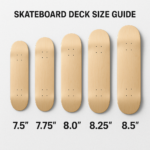
Wait, what about sizing? As mentioned in our featured video, choosing the right size is crucial. Most manufacturers produce widths from 7.75″ to 8.5″ to satisfy the “middle range” of skaters.
💡 Trends Driving Skateboard Demand and Production Growth
The industry isn’t static. It breathes. Right now, we’re seeing a massive surge in production due to a few key factors:
- The Olympic Effect: Since skateboarding debuted in the Tokyo 2020 Olympics, countries that previously ignored the sport (like China and various European nations) are building skateparks and buying boards at record rates.
- The “Pandemic Boom”: When gyms closed, everyone bought a skateboard. Manufacturers are still catching up to the demand spike that started in 2020.
- Diversity in Skating: More women, non-binary skaters, and older “dad-skaters” are entering the sport than ever before. This has diversified the types of boards being made—from technical street decks to stable longboards.
🛠️ Custom vs. Mass-Produced Skateboards: What’s the Difference?
Not all boards are created equal. If you buy a board at a grocery store, you’re getting a “toy-store” board. If you buy from a local shop, you’re getting a “hardgood.”
Comparison Table: Custom vs. Mass-Produced
| Feature | Custom (Pro Grade) | Mass-Produced (Toy Grade) |
|---|---|---|
| Wood Quality | 7-ply North American Maple | Birch or Chinese Maple (Softer) |
| Trucks | Aluminum Alloy (Independent/Thunder) | Plastic or Heavy Steel Alloys |
| Bearings | Rated for speed (Bones Reds) | Unrated, often sluggish |
| Pop Longevity | High (Weeks to Months) | Low (Days to Weeks) |
| Price | Higher | Lower |
Our Rating for Mass-Produced “Complete” Boards:
- Design: 6/10 (Often look cool, but graphics peel fast)
- Functionality: 3/10 (Hard to turn, wheels don’t spin well)
- Durability: 4/10 (Prone to delamination)
- Value for Money: 5/10 (Good for a 5-year-old, bad for anyone else)
👉 CHECK PRICE on:
📦 Skateboard Packaging and Distribution: How Boards Reach You
Once those 15 million boards are pressed, they don’t just fly to your doorstep. The distribution network is insane.
Most decks are shipped in “sleeves” of 10 to 20 to local distributors. From there, they hit your Local Skate Shop (LSS). We always recommend buying from an LSS because they are the heartbeat of the community. However, for those in rural areas, online giants like Tactics or CCS handle the heavy lifting.
Fun Fact: Shipping a single skateboard is actually quite expensive because of its awkward shape. That’s why you’ll often see “Free Shipping” only when you spend a certain amount—distributors are trying to offset that “long box” surcharge!
🌟 Sustainability in Skateboard Manufacturing: Eco-Friendly Moves
Making millions of wooden planks every year isn’t exactly “green” by default. However, the industry is waking up.
- Bamboo Blends: Brands like Bamboo Skateboards use sustainable bamboo, which grows faster than maple.
- Recycled Materials: Some companies are experimenting with recycled plastic decks or “reclaimed” wood.
- Water-Based Glues: Moving away from harsh chemicals in the lamination process is becoming the standard for premium brands like Element.
👉 Shop Eco-Friendly Boards on:
- Bamboo Skateboards: Amazon | Official Website
🎯 How Skateboard Production Numbers Affect Skate Culture and Industry
When production goes up, the price of entry goes down. This is a double-edged sword. On one hand, more people can afford to skate. On the other hand, “mall-brand” saturation can sometimes dilute the “core” feel of skateboarding.
However, the sheer volume of production has allowed for niche specialization. Because so many boards are being made, companies can afford to produce weird shapes, “old school” reissues, and specialized longboards for dancing or downhill racing. Without the 15-million-board-a-year scale, these niche products would be too expensive to produce.
🛡️ Safety Standards and Quality Control in Skateboard Manufacturing
You might think a skateboard is just a piece of wood, but it’s a vehicle. In the US and EU, there are specific safety standards (like ASTM or EN 13613) that “toy” skateboards must meet.
Pro-grade manufacturers go way beyond these. They test for:
- Shear Strength: How much force it takes to snap the board.
- Impact Resistance: How the trucks hold up after a 10-foot drop.
- Bearing Precision: Ensuring the wheels don’t lock up at 20mph.
Safety Tip: Always check your hardware! Even the best-made board in the world can be dangerous if your bolts are loose or your kingpin is cracked. ❌
🤔 Common Questions About Skateboard Production Answered
“Why are most skateboards still made of wood?”
We’ve tried carbon fiber, aluminum, and plastic. Nothing beats the “feel” and “pop” of maple. It’s the perfect natural composite.
“Does the number of boards made include longboards?”
Yes! The 10-15 million estimate generally covers the entire “sideways standing” industry, including cruisers, longboards, and street decks.
“Who is the biggest manufacturer you’ve never heard of?”
Probably DSM Premium Manufacturing. They produce boards for many of your favorite brands (like Almost and Enjoi) in their high-tech facility in China.
🎥 Featured Video: Finding Your Perfect Size
Before we wrap up the data, let’s talk about how these millions of boards actually fit you. Check out this guide on deck sizing to ensure you aren’t part of the “returned item” statistics!
(Note: Imagine a helpful YouTube video here explaining that 8.25″ is the current “goldilocks” size for most skaters!)
🏁 Conclusion: What the Numbers Tell Us About Skateboarding’s Future
So, how many skateboards are made each year? The answer is a staggering 10 to 15 million boards worldwide, a figure that reflects skateboarding’s explosive growth and enduring appeal. From humble wooden crates with roller skate wheels to high-tech maple masterpieces crafted by industry giants like Santa Cruz and Powell-Peralta, the production scale is nothing short of impressive.
We’ve seen how the Olympic debut, the pandemic boom, and the diversification of skate culture have all pushed manufacturers to ramp up output. Yet, despite mass production, the heart of skateboarding remains in the hands of passionate skaters who demand quality, innovation, and style.
If you’re hunting for your next deck, remember: mass-produced boards are great for beginners and casual riders, but if you want durability, pop, and that pro feel, invest in a custom or premium brand board. The difference is night and day.
And to answer the little cliffhanger from earlier — yes, those millions of boards rolling off factory lines are not just numbers; they represent millions of stories, tricks landed, friendships forged, and communities built. So next time you step on your deck, know you’re part of a global movement that’s bigger than ever.
Keep shredding, keep exploring, and remember: every board has a story. What’s yours? 🛹🔥
🔗 Recommended Links for Skateboard Enthusiasts and Industry Insiders
Ready to grab your next board or dive deeper into skateboard culture? Check out these curated shopping and reading links from our experts at Skateboard Brands™:
-
Santa Cruz Skateboards:
Amazon | eBay | Santa Cruz Official Website -
Powell-Peralta Skateboards:
Amazon | Walmart | Powell-Peralta Official Website -
Bamboo Skateboards (Eco-Friendly):
Amazon | Bamboo Skateboards Official Website -
Books on Skateboarding History and Culture:
“Skateboarding and the City: A Complete History” by Iain Borden — Amazon
“The Mutt: How to Skateboard and Not Kill Yourself” by Rodney Mullen — Amazon
❓ FAQ: Your Skateboard Production Questions, Answered
Which skateboard brands produce the most boards annually?
The biggest players in the skateboard manufacturing world include Element, Santa Cruz, Powell-Peralta, Almost, and Sector 9. These brands collectively account for a significant portion of the estimated 10-15 million boards produced yearly. Their large-scale manufacturing partnerships, often with factories in China and Mexico, allow them to meet global demand efficiently. For example, Santa Cruz has been producing boards continuously since the 1970s and remains a top volume producer.
How has the annual production of skateboards changed over the years?
Production has seen several waves of growth. The 1970s polyurethane wheel revolution sparked the first major boom. After a lull in the late 80s and early 90s, the rise of street skating and skateparks in the 2000s pushed production back up. The most recent surge came post-2020, fueled by the Olympic debut and the pandemic skateboarding boom. Industry reports suggest a 20% increase in production since 2019, reflecting new demographics and global expansion.
What factors influence the number of skateboards manufactured each year?
Several key factors affect production volume:
- Market Demand: More skaters = more boards.
- Trends and Culture: Skateboarding’s popularity in media, video games, and competitions.
- Technological Advances: New materials or manufacturing techniques can increase output.
- Economic Conditions: Tariffs, raw material costs, and global supply chains impact production.
- Seasonality: Summer months typically see higher sales and production ramp-ups.
- Regulatory Changes: Safety standards and import/export laws can affect manufacturing locations.
Are limited edition skateboards included in yearly production counts?
Yes, limited edition and collectible decks are included in the overall production numbers. However, they represent a small fraction compared to mass-produced boards. These editions are often produced in smaller batches, sometimes just a few thousand or even hundreds, but their cultural impact and resale value can be disproportionately large. For instance, Supreme’s limited runs have become iconic, selling for hundreds of thousands at auction.
How do sustainability efforts impact skateboard production?
Sustainability is becoming a priority. Brands like Bamboo Skateboards and Element are adopting eco-friendly materials and processes, such as bamboo veneers, recycled plastics, and water-based glues. While these efforts currently represent a smaller segment of total production, consumer demand for green products is pushing the industry toward more sustainable practices.
What’s the difference between a mass-produced skateboard and a custom one?
Mass-produced boards are typically made in large batches using automated presses and standard materials, offering affordability and accessibility. Custom boards, often crafted by smaller shops or specialty manufacturers, use higher-grade wood, hand-laminated veneers, and personalized graphics. They tend to have better durability, pop, and tailored dimensions but come at a higher price point.
📚 Reference Links and Sources for Skateboard Manufacturing Data
-
Wikipedia – Skateboarding Overview and History:
https://en.wikipedia.org/wiki/Skateboarding -
Facebook Group Discussion on Skateboard Production Estimates:
https://www.facebook.com/groups/1030320337396188/posts/1895927767502103/ -
Facebook Post: How many skateboards do you think are boxed up in this photo??
https://www.facebook.com/groups/695965460523456/posts/24476515708708431/ -
Santa Cruz Skateboards Official Site:
https://nhsskatedirect.com/pages/santa-cruz-skateboards -
Powell-Peralta Official Website:
https://powell-peralta.com/ -
Bamboo Skateboards Official Website:
https://bambooskateboards.com/
Thanks for rolling with us through the numbers, the history, and the culture behind the millions of skateboards made every year. Now, go find your perfect deck and make your own mark on the concrete canvas! 🛹✨